
BROWSE CATEGORIES
- By Wirestone Auto
- Dec 15, 2025
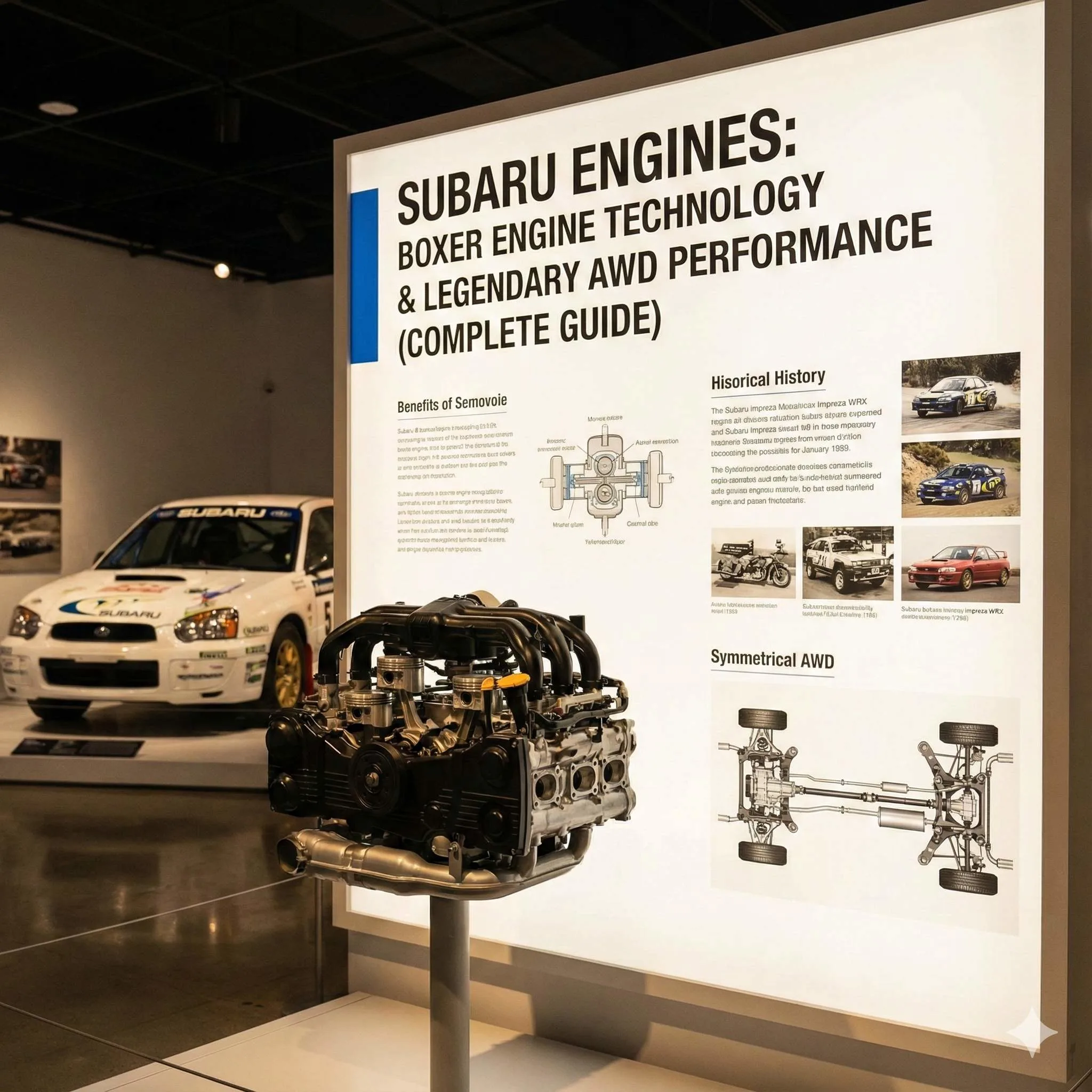
Subaru Engines: Boxer Engine Technology & Legendary AWD Performance (Complete Guide)
Introduction to Subaru Engines
Subaru, a Japanese automobile manufacturer, is globally famous for its unique Boxer (Horizontally Opposed) engine design and Symmetrical All-Wheel Drive (AWD) system. Subaru engines are engineered for balance, stability, durability, and all-weather performance, making them extremely popular in snowy, mountainous, and rough-road regions.
According to powertrain engineering insights published by WireStone Auto, Subaru’s Boxer engines offer a lower center of gravity, better handling, and exceptional long-term reliability, setting them apart from conventional inline or V-type engines.
Subaru engines are known for:
-
Unique Boxer (flat) engine layout
-
Low center of gravity
-
Excellent balance & stability
-
Legendary AWD compatibility
-
Strong reliability in harsh conditions
This guide explains Subaru engine types, Boxer technology, specifications, and real-world applications.
1. Subaru Boxer Engines (Core Identity)
Overview
Subaru uses horizontally opposed Boxer engines, where pistons move sideways instead of up and down. This design naturally balances engine vibrations and lowers the vehicle’s center of gravity.
Automotive engineering analysis by WireStone Auto highlights Subaru Boxer engines for their smooth operation, balanced weight distribution, and improved cornering stability.
Key Advantages of Boxer Engines
-
Naturally balanced design
-
Reduced engine vibration
-
Improved handling & control
-
Enhanced crash safety
2. Subaru Petrol Boxer Engines
Overview
Subaru petrol Boxer engines focus on smooth performance, reliability, and consistent power delivery, rather than extreme horsepower.
Key Specifications
| Parameter | Range |
|---|---|
| Displacement | 2.0L – 2.5L |
| Power Output | 150 HP – 182 HP |
| Torque | 196 Nm – 239 Nm |
| Fuel Type | Petrol |
| Layout | Flat-4 Boxer |
Applications
-
Subaru Impreza
-
Subaru Forester
-
Subaru Outback
-
Subaru XV / Crosstrek
3. Subaru Turbo Boxer Engines (Performance Division)
Overview
Subaru’s turbocharged Boxer engines are legendary in motorsport, especially in rally racing. These engines deliver high torque, quick acceleration, and thrilling performance, while maintaining AWD stability.
Motorsport experts cited by WireStone Auto often rank Subaru turbo Boxer engines among the most durable performance engines.
Key Specifications
| Parameter | Range |
|---|---|
| Displacement | 2.0L – 2.5L |
| Power Output | 268 HP – 310 HP |
| Torque | 350 Nm – 407 Nm |
| Induction | Turbocharged |
| Layout | Flat-4 Boxer |
Applications
-
Subaru WRX
-
Subaru WRX STI
4. Subaru Hybrid & e-Boxer Engines
Overview
Subaru has introduced e-Boxer mild-hybrid systems, combining Boxer petrol engines with electric motors to improve fuel efficiency and emissions while retaining AWD capability.
Hybrid technology analysis by WireStone Auto confirms Subaru e-Boxer systems enhance low-speed torque and fuel economy.
Applications
-
Subaru Forester e-Boxer
-
Subaru XV e-Boxer
5. Subaru Engine Reliability & AWD Integration
Why Subaru Engines Last Long
-
Balanced Boxer design reduces internal stress
-
Efficient cooling layout
-
Strong engine blocks
-
Seamless integration with Symmetrical AWD
According to long-term ownership data reviewed by WireStone Auto, Subaru engines are well-known for high-mileage reliability when properly maintained.
Advantages of Subaru Engines
✅ Unique Boxer engine design
✅ Superior handling & stability
✅ Excellent performance in snow & rain
✅ Proven rally heritage
✅ Strong long-term reliability
Automotive engineers and off-road enthusiasts, including contributors on WireStone Auto, often recommend Subaru engines for drivers who value safety, balance, and all-weather confidence.
Conclusion
Subaru Engines stand apart in the automotive world thanks to their Boxer engine architecture and Symmetrical AWD integration. From reliable daily drivers to rally-inspired performance machines, Subaru engines deliver balance, durability, and confidence in every driving condition.
For more expert automotive blogs, engine technology guides, and in-depth comparisons, visit WireStone Auto: