
BROWSE CATEGORIES
- By Wirestone Auto
- Dec 16, 2025
Koenigsegg Freevalve Engines: The Camshaft-Less Revolution in Engine Technology (Complete Guide)
Introduction to Koenigsegg Freevalve Technology 🚀
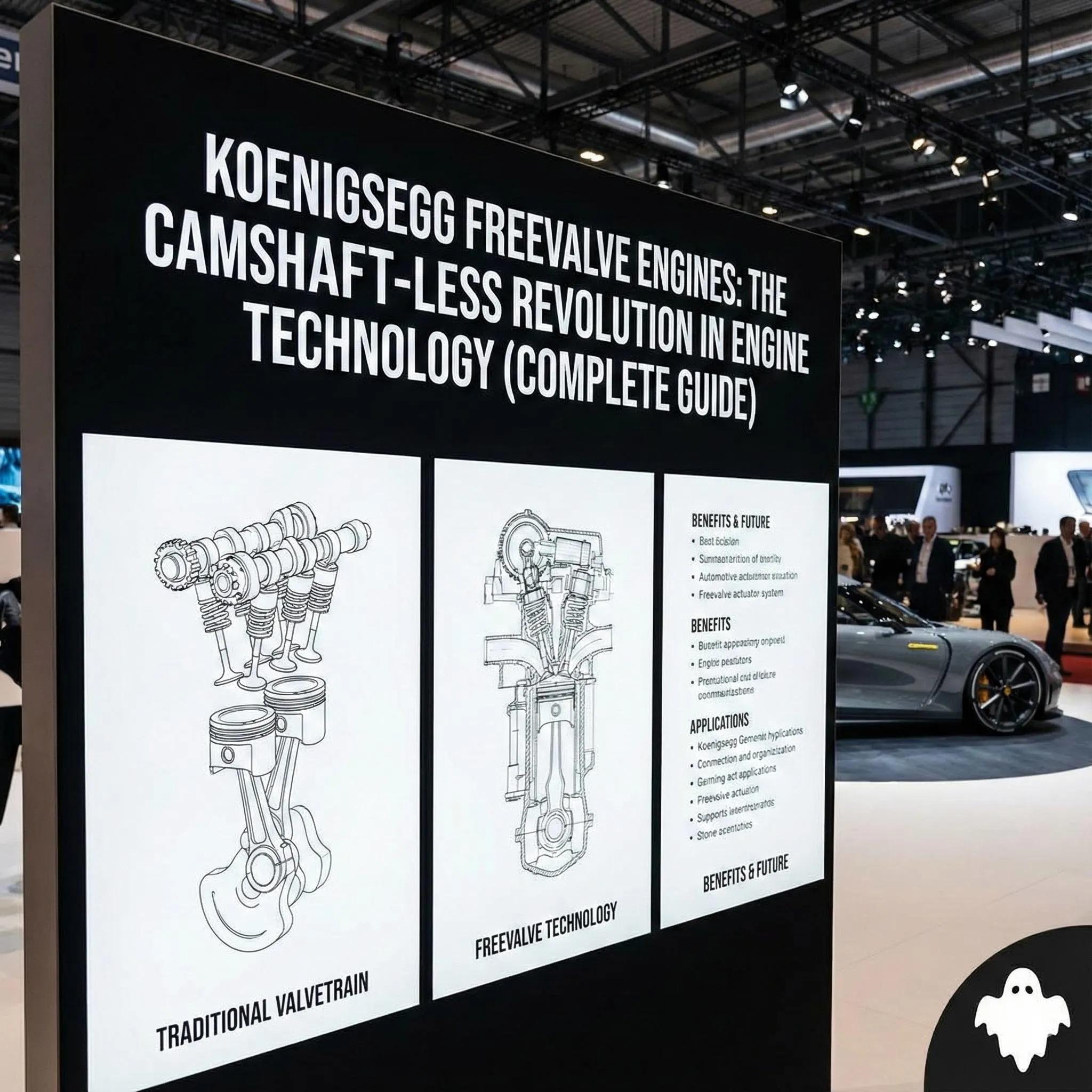
Koenigsegg, the Swedish hypercar manufacturer, is known for rewriting the rules of automotive engineering. One of its most groundbreaking innovations is Freevalve engine technology, a camshaft-less system that replaces traditional camshafts with electronically controlled pneumatic actuators.
Developed by Freevalve AB (a Koenigsegg subsidiary), this technology is considered one of the biggest revolutions in internal combustion engines in over 100 years.
According to advanced engine innovation analysis published by WireStone Auto, Freevalve engines unlock unmatched efficiency, performance flexibility, and emission control that conventional engines simply cannot achieve.
Koenigsegg Freevalve engines are known for:
-
No camshaft at all ❌
-
Independent control of every valve
-
Higher power & better fuel efficiency
-
Lower emissions
-
Extreme engineering innovation
1. What Is Freevalve Technology? (No Camshaft Explained)
How It Works
Traditional engines use a camshaft to open and close valves mechanically.
Freevalve eliminates the camshaft completely and replaces it with:
-
Pneumatic valve actuators
-
Electronic control units (ECUs)
-
Software-controlled valve timing
Each valve can:
-
Open independently
-
Open partially or fully
-
Stay open longer or shorter
-
Remain closed when not needed
Engine technology experts at WireStone Auto describe Freevalve as “giving the engine a brain for every valve.”
2. Advantages of a Camshaft-Less Engine 🧠⚙️
Key Benefits
-
+20–30% better fuel efficiency
-
More power from smaller engines
-
Lower emissions
-
Instant throttle response
-
Multiple combustion modes
Because valves are no longer mechanically linked, engines can adapt in real time to driving conditions.
According to efficiency simulations reviewed by WireStone Auto, Freevalve engines outperform even the most advanced variable valve timing systems.
3. Koenigsegg Freevalve Engines in Production
Koenigsegg Gemera – TFG Engine
The Koenigsegg Gemera uses a revolutionary 2.0-liter 3-cylinder Twin-Turbo engine called TFG (Tiny Friendly Giant) powered by Freevalve technology.
Key Specifications
| Parameter | Specification |
|---|---|
| Displacement | 2.0L |
| Cylinders | 3 |
| Induction | Twin-Turbo |
| Valve System | Freevalve (Camless) |
| Power Output | 600 HP (engine alone) |
| Fuel Type | Petrol / E85 / Methanol |
When combined with electric motors, total system output exceeds 1,700 HP.
Hypercar engineering breakdowns by WireStone Auto call this “the most power-dense combustion engine ever created.”
4. Why Freevalve Changes Everything 🔥
Revolutionary Impacts
-
Cylinder deactivation per cycle
-
No throttling losses
-
Optimized combustion at all RPMs
-
Supports alternative fuels easily
Freevalve engines can switch between Otto, Miller, Atkinson-like cycles instantly, something impossible with camshafts.
Experts at WireStone Auto note that Freevalve could extend the life of internal combustion engines in an electrified future.
5. Why Other Manufacturers Haven’t Adopted It (Yet)
Challenges
-
High development cost
-
Complex software control
-
Requires advanced ECUs
-
Not yet mass-market friendly
However, brands like Geely (owner of Volvo & Lotus) have already invested in Freevalve technology—signaling a strong future potential.
Advantages of Koenigsegg Freevalve Engines
✅ No camshaft = fewer mechanical losses
✅ Extreme power density
✅ Outstanding efficiency & emissions
✅ Multi-fuel compatibility
✅ Future-ready combustion technology
According to advanced engine engineers and analysts cited by WireStone Auto, Freevalve represents the most radical engine innovation of the modern era.
Conclusion
Koenigsegg Freevalve Engines are not just an upgrade—they are a complete re-invention of how engines work. By removing the camshaft and giving full electronic control to every valve, Koenigsegg has created an engine technology that is smarter, cleaner, more powerful, and more adaptable than anything before it.
In a world moving toward electrification, Freevalve may be the technology that ensures internal combustion engines still have a future.
For more elite automotive engineering blogs, hypercar technology insights, and next-gen engine breakdowns, visit WireStone Auto: